
Platforms such as ChatGPT, Google Gemini, Claude, and Midjourney, which have fundamentally transformed the way we work in the digital world, are now among the most frequently visited destinations. These tools go far beyond simply writing text or generating visuals; they significantly simplify users’ lives across many areas, from coding support to data analysis. Although new features are announced almost every day in this fiercely competitive field dominated by technology giants, the platforms that sit at the top are generally those that prioritize user experience and offer high accessibility.
The primary reason behind the popularity of these productivity-focused services is their ability to complete seemingly complex tasks within seconds. Having become indispensable assistants for content creators, developers, and marketing professionals in particular, these platforms not only save time but also push the boundaries of creativity. With free trial versions or credit-based systems that successfully reach broad audiences, artificial intelligence models are no longer limited to technology enthusiasts; they have secured a place in the bookmarks of almost everyone who actively uses the internet.
Selecting the right tool for your specific needs is the most critical factor that directly impacts efficiency. Despite the hundreds of available options on the market, the stability and extensive plugin ecosystems offered by widely adopted platforms clearly set them apart from competitors. Knowing which platform delivers better results for which purpose helps you manage both your budget and your energy more effectively. For this reason, becoming familiar with the tools that consistently rank at the top of popular lists is one of the most solid steps you can take to enhance your digital competencies.
The Most Popular AI Tools for Copywriting and Conversational Use
For those who struggle with words or professionals racing against time, text-based AI tools have become true lifesavers. These systems do far more than generate simple blog posts; they take a wide range of burdens off your shoulders, from constructing complex scenarios to managing email traffic. Instead of staring at a blank page waiting for inspiration, you can now create drafts within seconds by providing the right prompts and make your creative processes far more efficient.
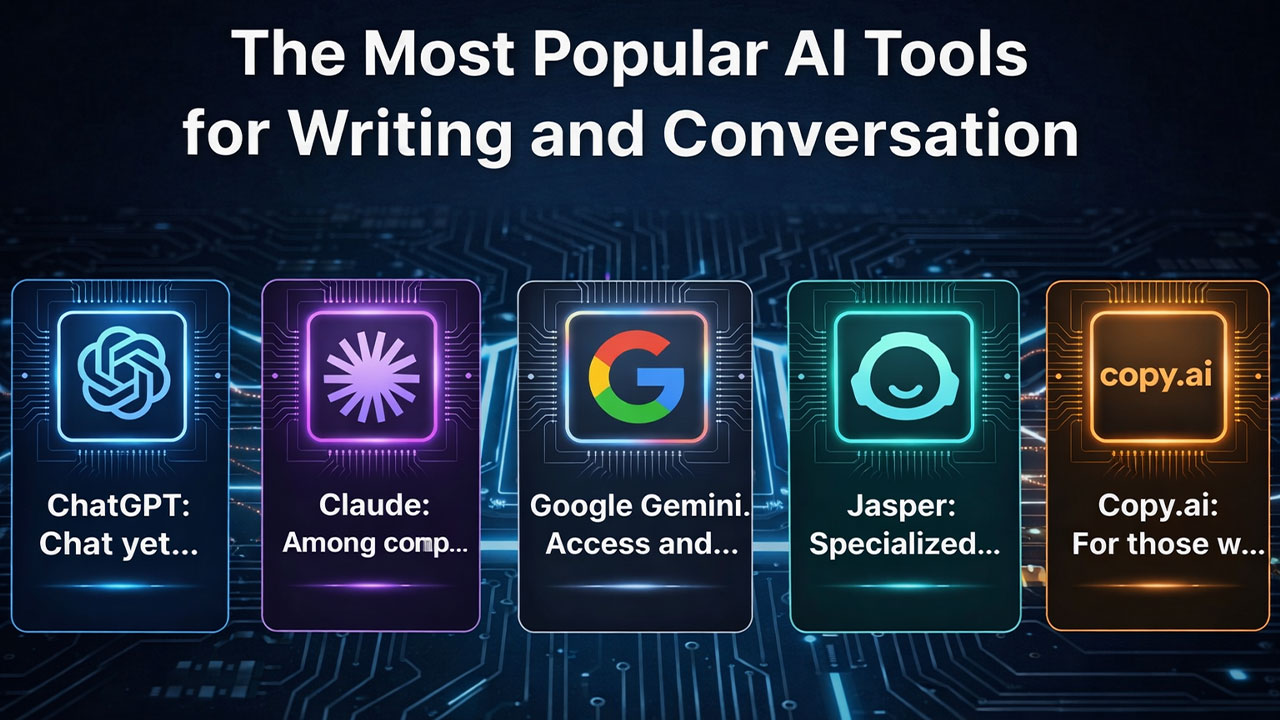
- ChatGPT: As the most well-known player in the industry, it stands out with its versatile use cases and highly advanced conversational capabilities.
- Claude: It distinguishes itself from competitors with its ability to understand long-form content and produce a more natural, human-like tone.
- Google Gemini: Thanks to its integration with the Google ecosystem, it offers significant convenience in accessing up-to-date information and performing analyses.
- Jasper: A professional tool specialized in marketing language, advertising copy, and SEO-optimized content creation.
- Copy.ai: Provides practical solutions for those who want to create social media posts and short, impactful advertising slogans.
The most suitable platform for you will entirely depend on your intended use case and expectations. While some tools offer greater flexibility for creative writing, others deliver more consistent results for data-driven technical content. Rather than relying on a single solution, experimenting with different models based on your project requirements and identifying the one that best fits your workflow will provide substantial long-term advantages.
The Best Image and Design-Oriented Visual Generation Platforms
Visual generation tools that have eliminated technical barriers in the design world allow you to translate your imagination onto the screen within seconds. Detailed illustration work or complex photo compositions that once took hours can now be completed effortlessly by combining the right words. These platforms significantly elevate visual quality not only for professional graphic designers but also for students enhancing presentations and social media content creators alike.
- Midjourney: Offers unparalleled quality for those seeking detailed and aesthetic compositions, with its artistic depth, lighting mastery, and high-resolution outputs.
- DALL-E 3: Working in integration with ChatGPT, it excels at understanding even the most complex prompts and accurately generating the scene you describe.
- Stable Diffusion: Appeals to advanced users seeking full control and freedom with its open-source structure that can be run locally on your own computer.
- Leonardo.ai: Delivers fast and impressive results with specialized models, particularly for game assets, character designs, and stylized visuals.
- Canva Magic Media: Embeds artificial intelligence directly into its popular design interface, enabling visual creation within projects without the need for additional software.
Achieving success in visual creation largely depends on discovering which platform’s style best aligns with your project. Some sites excel at photorealistic results, while others shine in artistic, vector-based, or abstract works. Using credit systems and free trial options to personally test different platforms is the most practical way to capture that unique image in your mind.
AI Applications That Simplify Business Life and Increase Productivity
In today’s business world, time management and focus are among the most decisive factors for success. The workload created by routine tasks, endless email traffic, and complex data analysis can make it difficult for professionals to concentrate on strategic matters where they truly add value. This is precisely where intelligent assistants step in, taking on operational responsibilities such as meeting notes and presentation preparation, accelerating office workflows while minimizing error margins.
- Notion AI: Consolidates note-taking, project management, and document summarization under a single platform, organizing scattered workflows and simplifying access to information.
- Otter.ai: Transcribes meetings in real time and automatically summarizes key discussion points, eliminating the need for manual note-taking.
- Zapier: Builds bridges between the applications you use, allowing you to automate repetitive workflows without any coding knowledge.
- Grammarly: Goes far beyond correcting grammar mistakes by helping adjust tone and ensuring your communication becomes more effective and professional.
- Beautiful.ai: Enables you to create visually rich, perfectly aligned presentations within minutes simply by entering content and data—no design skills required.
As digital transformation accelerates, integrating productivity tools into business processes is no longer a luxury but a necessity to remain competitive. Professionals who make technology a natural part of their workflows can devote far more energy to creativity and decision-making rather than administrative tasks. Identifying and adopting the applications that best fit your existing work system is a strategic move that will put you one step ahead in your career.
Current AI Platforms You Can Try for Free
For those who want to explore technological possibilities before committing to high subscription fees, the market offers a wide range of generous options. Many platforms either provide completely free versions or grant access to their features through daily credit limits in order to expand their user base. This allows you to step into the world of artificial intelligence without spending money and test which tools best align with your workflow—risk free.
- Microsoft Copilot: Stands out by offering an advanced language model like GPT-4 for free, generating responses with up-to-date data through internet connectivity.
- ChatGPT: Even in its basic version, it serves as a fast and capable assistant for daily writing, idea generation, translation, and coding support.
- Google Gemini: Integrates seamlessly with Google applications, providing significant convenience for personal tasks such as drafting emails, summarizing content, or planning trips.
- Bing Image Creator: Uses the DALL-E 3 infrastructure to allow free creation of high-quality, creative visuals using text prompts.
- Hugging Chat: Offers a fast, practical, and transparent alternative for those who want to experiment with open-source models without mandatory account registration.
These platforms that provide free access represent an excellent starting point for anyone seeking to improve AI literacy. In many cases, the core functions required by standard users can be easily met through these versions without upgrading to paid plans. Incorporating these tools into your daily routine will help you become familiar with the technology and align with future work standards from today onward.
The Best Platforms Offering Software Development and Coding Support
Software development processes are undergoing one of the fastest transformations in history with the introduction of AI-powered assistants. Debugging tasks or writing code blocks from scratch—once requiring hours—can now be resolved within minutes thanks to intelligent, real-time suggestions. These platforms not only reduce the workload of experienced engineers but also significantly shorten the learning curve for those new to coding. By simplifying complex algorithms and promoting clean coding habits, these tools have become an essential component of modern projects.
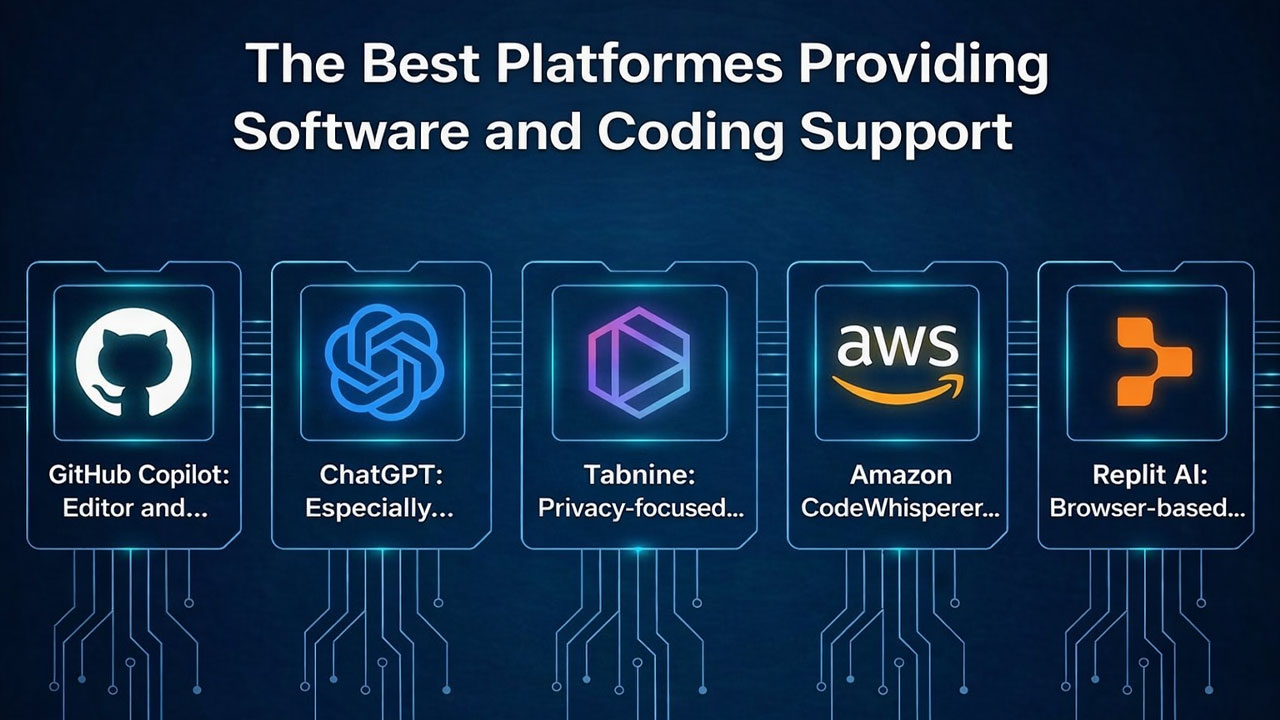
- GitHub Copilot: Works directly within your editor, analyzing your code in real time and accurately predicting the next line or function.
- ChatGPT: Particularly with the GPT-4 model, it provides deep technical support in identifying logic errors, optimizing code, and creating project scaffolding from scratch.
- Tabnine: Notable for its privacy-focused approach, it learns your coding habits over time and delivers personalized code completion suggestions tailored to your project’s language.
- Amazon CodeWhisperer: Optimized for developers working within the AWS ecosystem, offering security scans and code recommendations that significantly accelerate cloud-based projects.
- Replit AI: Integrated into a browser-based development environment, allowing you to write, test, and debug code without any installation requirements.
While coding assistants are undeniably powerful, designing system architecture and ensuring logical integrity still require human intelligence. Rather than viewing these tools as a threat, they should be seen as accelerators that free you from repetitive tasks and allow you to focus on creative problem-solving. Integrating these technologies into your development discipline will not only shorten project delivery timelines but also noticeably improve the quality of your code.
Which AI Platform Is Best Suited to Your Needs?
Choosing the right platform begins with clearly defining the nature of the task you want to accomplish. The market is filled with hundreds of tools, each equipped with different capabilities, and not all of them deliver the same quality for every use case. For instance, while creative writing demands language models with high imaginative capacity, tasks such as data analysis or technical reporting require systems with proven accuracy and internet access. Listing your expectations and project requirements will significantly simplify this seemingly complex decision-making process.
Ease of use and budget considerations play just as significant a role as functionality during the decision phase. Some advanced platforms require monthly subscription fees in exchange for high performance, while free alternatives may be more than sufficient for everyday tasks. Additionally, your level of technical expertise will influence your choice; open-source, highly customizable systems may be ideal for those comfortable with command-line environments, whereas simple, user-friendly interfaces are far more efficient for professionals with limited time.
The most reliable way to make a final decision is to actively test shortlisted candidates within your own workflow. An application that looks perfect on paper may not align with your working style in practice or may fall short of expectations. By taking advantage of trial versions to evaluate response times, output quality, and system compatibility, you can identify the most suitable option. Remaining flexible and open to experimenting with new tools in this rapidly evolving field ensures that your digital skills stay consistently up to date.



Do Comment