
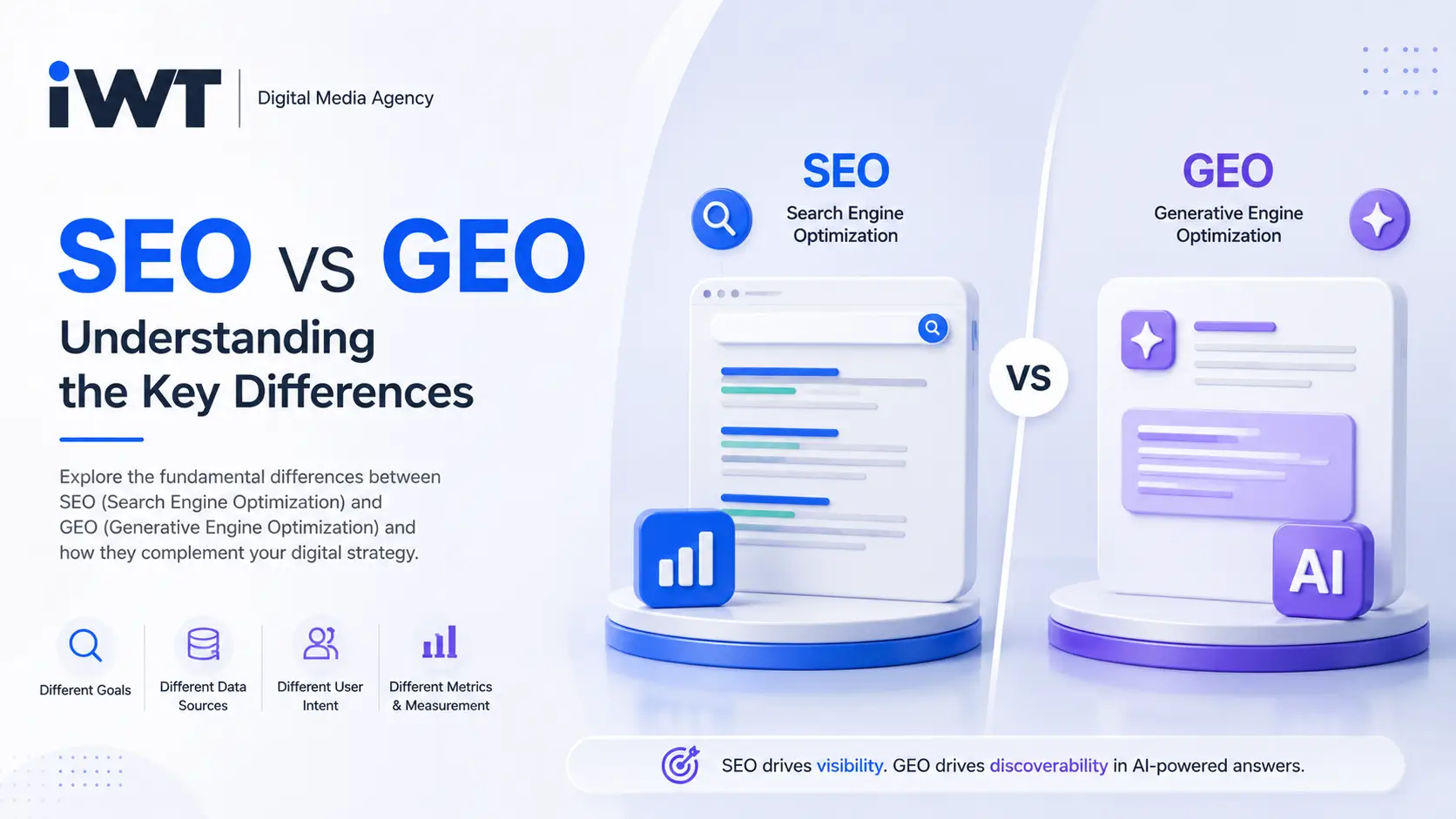
While search engine optimization aims to drive traffic to websites by pushing them to the top positions for specific keywords, generative engine optimization seeks to have content crawled by AI models and incorporated directly into the answer itself. The most obvious distinction between these two concepts is that one serves as a bridge that directs the user to the information source, whereas the other assumes the role of an assistant that processes and delivers information at the source. SEO focuses on technical rules, ranking factors, and link structures, while the next-generation optimization process is built on semantic coherence, data reliability, and content authority.
In traditional methods, success is typically measured by position on the search results page and the resulting click-through rate; however, in AI-based processes, the main objective is for algorithms to recognize your brand as a trustworthy reference. User habits have evolved from clicking links to receiving clear, compiled, and synthesized answers to questions. For this reason, content strategies are now shaped not by ease of crawling for bots, but by large language models’ ability to verify, process, and quote information.
At the implementation stage, SEO centers on factors such as technical infrastructure, site speed, and mobile compatibility, whereas GEO prioritizes the elements that define content quality—such as statistical data, expert opinions, and original analyses. One strives to be indexed and visible in search engines, while the other works to earn a qualified position in an AI training dataset and to be recommended. For the sustainability of a digital presence, it is necessary to design these two disciplines not as completely separate, but as strategic steps that nourish and complement each other.
Core Strategic Differences Between SEO and GEO
Although SEO and GEO strategies ultimately aim to reach users, they rest on very different foundations in terms of their roadmaps and success criteria. Traditional optimization processes focus on satisfying the technical criteria of search engine bots to move a page up in rankings and drive direct traffic to the site. In contrast, next-generation generative engine optimization aims for the content to be fully understood, validated, and synthesized by AI and presented to the user as a unit of information. While one competes technically for the blue links that route users to a website, the other tries to imprint the data a brand provides into AI memory as a reliable, primary source.
- While an SEO strategy is shaped by keyword volumes and search intent, a GEO strategy prioritizes semantic depth, information authority, and data-backed evidence.
- In the traditional approach, the main success metrics are click-through rates, bounce rate, and organic traffic; in the next-generation approach, the metric is frequency of citation in AI answers and brand visibility.
- SEO focuses on factors that affect crawl budget such as technical infrastructure, site speed, and mobile compatibility, whereas GEO invests in the accuracy, originality, and AI-readable structure of content.
- Search engines play an intermediary role that directs users to different sources, whereas generative models process and summarize information and provide the end user with a final answer.
- In SEO, competitive analysis is based on ranking gaps and backlink counts; in GEO, competitors’ content quality and their credibility score in the eyes of AI are decisive.
This strategic separation also fundamentally changes how digital marketing budgets and effort should be managed. Relying only on technical improvements and keyword tracking will no longer be sufficient to carry your brand into the search world of the future. What businesses need to do is preserve existing SEO gains while restructuring their content around the principles of transparency, expertise, and data-driven rigor that AI algorithms expect. Building a hybrid structure that combines both disciplines guarantees presence in today’s search results and influence in tomorrow’s conversational search experience.
Is SEO Over? Will GEO Replace SEO in the Future?
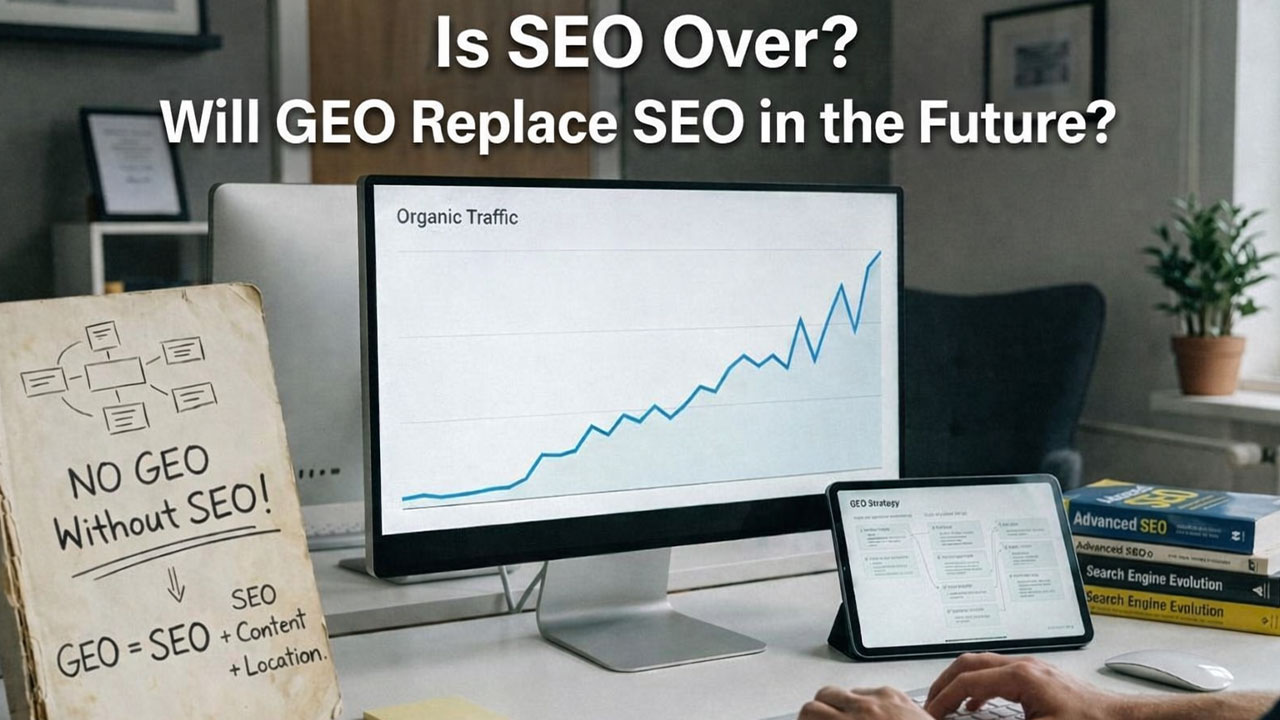
Claims that the end has come—often voiced in the world of search engine optimization—do not signal the disappearance of the industry, but rather a profound transformation. Digital marketing dynamics are shifting from a simple ranking race based on keywords to a multi-layered structure that places user experience and information quality at the center. Technology giants and search engines will always need organic results to sustain themselves, because the main artery that AI models feed on and learn from is current, original content produced by people on websites. Therefore, rather than vanishing entirely, traditional methods will continue to exist—integrated into new standards brought by technology—and will remain strong, potentially even stronger.
Generative engine optimization positions itself not as a force that eliminates existing processes, but as a higher layer that complements and strengthens them within future digital strategies. Even if people prefer AI assistants for fast answers such as weather, stock data, or simple definitions, the habit of visiting websites will persist for detailed research, product purchases, or situations requiring deep analysis. At this point, GEO helps brands appear in AI summaries and recommendations, while SEO continues to build the technical path that enables users to go beyond that summary and reach the primary source. The most accurate approach is to view these two concepts not as alternatives to each other, but as different mechanisms that feed the same ecosystem.
The search experience of the future will be built on a hybrid model, and within that structure it will become impossible for AI to notice sites that lack a solid technical foundation. It is technically illogical for content that organic crawling bots cannot access—because the sitemap is broken or the page is not indexed—to be trusted and referenced by generative models. Sustainable digital success lies in remaining faithful to classic optimization rules while shaping content strategy in line with the expectations of machine learning algorithms. This major transformation in the sector does not mean the roots are drying out; it means the branches are extending toward new technologies and spreading across a wider field.
In Content Production: Keywords or Semantic Coherence?
In the early years of digital marketing, repeating certain terms many times within a text was seen as sufficient to rank; today’s algorithms consider that mechanical approach inadequate. Search engines and advanced AI models focus not on numerical word density, but on the context and depth the text provides. Instead of stuffing a topic with popular phrases, structures that understand the user’s real search intent and respond comprehensively have gained a far more valuable position.
Semantic coherence requires moving beyond target words and presenting related concepts and subtopics in a natural flow. The consistency and coverage of the information provided helps search bots fully grasp what the content is about. Using synonyms, complementary terms, and supporting ideas enriches the text while sending some of the strongest signals that you are an authoritative source.
Readers tend to quickly get bored with texts written in a robotic tone and filled with repetitive definitions, and they are likely to leave the page. Adopting a human-centered and fluid narrative increases time on site, indirectly contributing to technical success. Content constructed in a natural conversational language and rich in informational value builds a strong and lasting connection with the target audience—without any need for technical manipulation.
In a successful content strategy, search terms serve as a compass, while semantic structure becomes the ship that moves along that route. Rather than forcing target phrases into the text, blending them into the natural flow of the topic is the most accurate and sustainable method. In the digital world of the future, the winners will not be those who merely include the searched keyword, but those who best understand and satisfy the need behind that keyword.
The Coexistence of Ranking-Focused and Recommendation-Focused Approaches
Digital visibility strategies are now taking on a hybrid structure rather than progressing in a single lane. Technical efforts that aim to climb to the top of search results and authority-driven approaches that seek to earn the trust of AI systems are complementary elements. While it is necessary to align with ranking factors to attract visitors, it is also essential to offer a recommendable quality to win the loyalty of both incoming users and bots. Integrating these two disciplines positions brands as both noticeable and memorable.
Traditional optimization methods function as the core compass that enables your website to be discovered in the digital ocean. Building a platform with solid technical infrastructure and high accessibility allows AI algorithms to crawl your content and include it in their data pool. It is technically unlikely for a source that is not present in search engine indexes or that shows no organic performance to be noticed and recommended by generative models. Therefore, ranking success sparks the first ignition needed for the recommendation mechanism to work.
Producing content with high recommendation potential directly improves semantic depth and user experience. Providing data that is clear, accurate, and structured enough to be accepted as a reference by AI helps visitors find the answers they seek in the shortest possible time. This quality-driven structure increases user satisfaction and sends strong quality signals to search engines, indirectly improving ranking performance. Investing in content quality is a strategic move that satisfies both types of algorithms at the same time.
In the future digital competitive environment, it will not be enough merely to be visible; it will be necessary to be positioned as a reliable harbor of information. Businesses that combine traffic-oriented engineering work with reputation-oriented content design build the most resilient structure against changing search habits. This integrated system—one that understands the technical language of bots and answers user needs with precision—holds the key to sustainable growth.
The Risk of Traffic Loss and New Brand Opportunities Brought by GEO
The widespread adoption of AI-based search experiences is bringing a serious source of concern for website owners and content creators. If users can find the answer instantly and in summarized form on results pages, an inevitable drop in clicks to websites may occur. However, this is not the end of digital marketing, but the beginning of an evolved and more refined version of it. Existing in a zero-click world means your brand name reaches millions of users directly as a trusted authority. The decrease in physical visits can be compensated by a massive increase in brand awareness and digital reputation.
- Qualified Visitor Flow: Users who still click through after getting the answer form the audience most likely to convert—those who genuinely want to learn in depth.
- Validation of Brand Authority: Being cited by AI positions you, in the eyes of potential customers, as the indisputable leader and reliable source in the industry.
- Standing Out in Voice Search: GEO-aligned content significantly increases the chances that your brand name will be spoken in answers delivered by voice assistants and will be remembered.
- Less Competition, Higher Visibility: Instead of getting lost among millions of search results, you appear in summarized answers—an exclusive and highly attention-grabbing space that separates you from competitors.
- Rising Trust Index: Being the source selected by algorithms is perceived as a quality endorsement and reinforces brand loyalty faster than traditional advertising.
In this new era, reading success metrics only through pageview counts can lead to misleading conclusions. Shifting the focus from quantity to quality allows brands to grow on a stronger and more profitable foundation in the long run. Rather than retreating out of fear of losing clicks, it is a strategic necessity to turn your content into a knowledge asset that AI cannot do without. Taking your place early in this new format of the digital ecosystem will open the way not only to adapt to, but also to shape future consumer habits.
Which Method Should You Invest In? Is It Possible to Use Both Together?
For any brand that wants to exist in the digital world, choosing between these two concepts should not even be on the table. One is not the alternative of the other; on the contrary, it is the life source the other needs to exist. Search engine optimization builds the foundational infrastructure that makes a website technically accessible, crawlable, and understandable. Without this solid base, it is technically impossible for AI models to discover your site, crawl it, learn from your content, and present it to users.
When planning investment, it is essential not to abandon classic methods entirely, but to reshape those strategies according to the expectations of generative engines. Every technical improvement and content update must now meet standards that satisfy not only search bots but also AI algorithms. SEO work that increases your site’s authority is, in fact, the strongest assurance of GEO success as well.
Blending existing optimization processes with an AI-focused perspective is the only valid way to be future-ready. It is necessary to transform old keyword-centered habits into a next-generation working discipline that prioritizes semantic coherence and data accuracy. Achieving this integration guarantees your brand’s simultaneous growth in both traditional search results and next-generation answer engines.
In summary, applying a hybrid model is not a preference, but a necessity imposed by the digital ecosystem. Just as you cannot gain visibility without technical SEO, a strategy without GEO vision is destined to lose impact over time. Moving forward by melting both disciplines into a single approach will make your brand resilient and strong against any algorithm changes and technological transformations.




Do Comment