
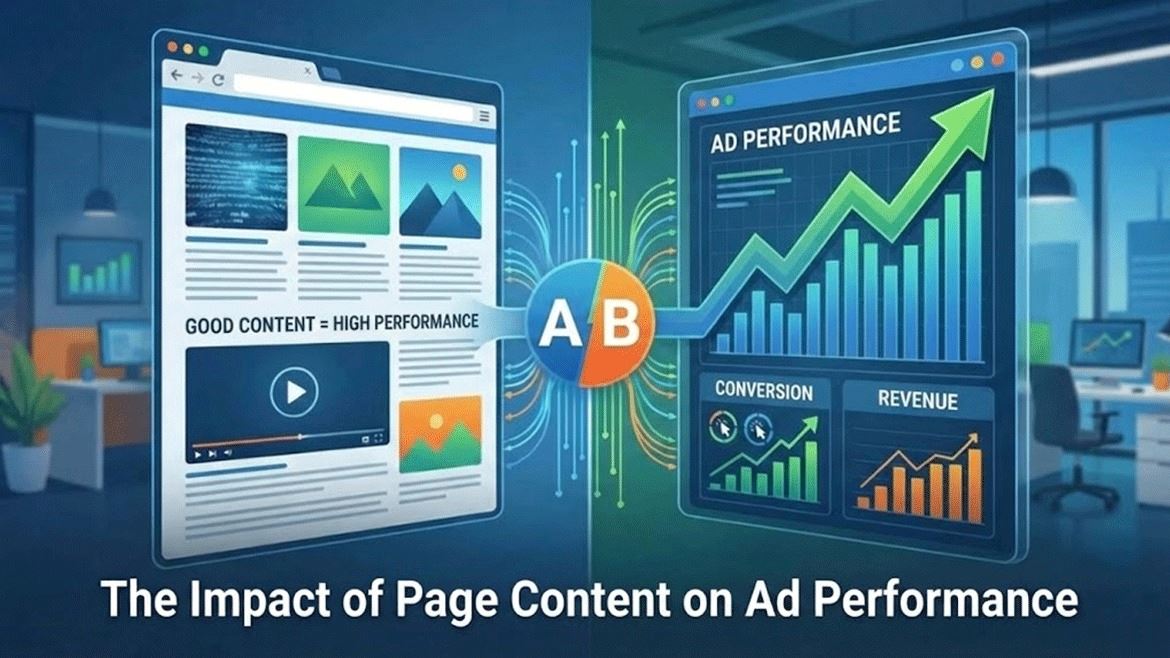
The success of your advertising campaigns depends not only on the right targeting settings or the budget you spend, but directly on the quality and content of the page that greets the user. When visitors click an ad, if they don’t encounter content that presents what you promised in a clear, sincere, and persuasive way, they will leave the site within seconds. This lowers the quality score on ad platforms, increases your cost per click, and severely undermines conversion rates; in other words, your page content is the most critical technical and psychological factor that determines the efficiency of your ad budget.
The copy, visuals, and overall flow on a product or service page must instill trust in the potential customer and convince them that they have found exactly the solution they are looking for. Weak or confusing content that fails to meet the expectations you created in your ad copy immediately breaks the user’s motivation to purchase. An effective page structure should function like a silent sales consultant that removes every question mark in the user’s mind and smoothly guides them toward purchasing or completing a form.
Conversion-focused content is the most reliable way to maximize the return on your ad spend—your ROI. On-page optimization is vital not only for search engines, but also for turning paid traffic into loyal customers. A well-structured landing page that prioritizes user experience and places calls to action in the right spots lowers your advertising costs while increasing sales and helps your digital marketing strategy achieve sustainable growth.
The Role of Page Quality in Reducing Advertising Costs
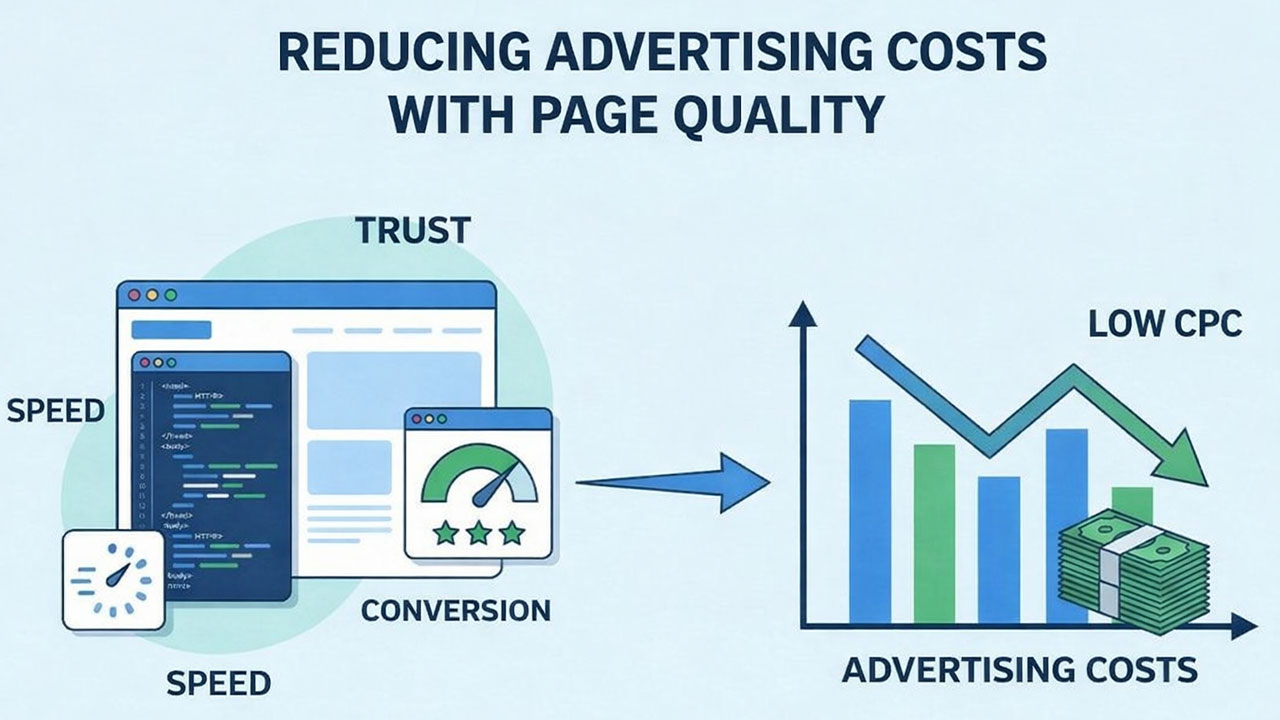
In digital advertising, the most effective way to protect your budget and use it efficiently is to improve the technical and content quality of the page that welcomes visitors. Google and other advertising platforms operate with advanced algorithms that reward websites that genuinely provide value to users. This critical metric, known as the Quality Score, is determined by factors such as the relevance, originality, and speed of your page. The higher your score, the lower your cost per click becomes, and the greater your chance of reaching far more potential customers with the same budget.
A page design that puts user experience at the center directly determines the return on your advertising spend. If a visitor cannot easily find the information, service, or product they are looking for—or encounters a complicated structure—they tend to leave the page within seconds. This behavior signals to search engines that your page is inadequate and negatively impacts your ad performance. Building a fast-loading, mobile-friendly structure with clear navigation reduces bounce rates and ensures you get value from every cent you spend.
For reducing costs, it is a vital requirement that what you promise in your ad copy aligns perfectly with your page content. When a user clicks the ad, they should be met with a message that fully matches their expectations and delivers the promised solution. This strong semantic alignment between the ad and the content is recognized by the system as a high indicator of credibility. With highly relevant pages, you can rank higher and secure more advantageous positions in auctions even if you bid lower than your competitors.
Trust is one of the most important keys to optimizing conversion costs. Pages that look professional, are transparent, clearly display contact information, and include user references significantly accelerate the persuasion process. When a visitor feels safe on the page they land on, they complete actions such as purchasing or filling out a form much more comfortably. An increase in conversion rate means your cost per lead automatically decreases; in other words, a high-quality page structure reduces the amount of money you pay for each prospect.
Investing in page quality is, in fact, a direct and lasting contribution to your advertising budget. Rather than focusing only on the ad panel and targeting, improving your website’s performance delivers sustainable marketing success. Optimized content and a flawlessly functioning technical infrastructure increase the efficiency of your ad campaigns while also elevating you in organic results. To win in the long run and avoid unnecessary costs, you must continuously analyze and improve the page experience.
How Does Google Ads Quality Score Get Influenced by Site Content?
That famous score between 1 and 10 you see in the Google Ads dashboard is essentially a digital report card of how much respect your website shows to visitors. Ad platforms evaluate the page you send users to by instantly scanning its content, speed, and relevance. If your targeted keywords and ad copy are in perfect harmony with the messaging on the landing page, the system rewards you. Increasing this metric depends directly on how clearly, transparently, and satisfactorily your on-page copy meets the visitor’s needs.
The core factors in site content that shape the Quality Score are as follows:
- Content and Keyword Alignment: The titles, subheadings, and paragraphs on your page should naturally include the terms you target in the ad group in a meaningful flow.
- Original, Value-Creating Information: You should provide unique insights that users cannot easily find elsewhere—original, non-duplicative, and genuinely useful.
- Transparency and Trustworthiness: Contact information, business details, and privacy policies should be clearly stated to prevent any sense of distrust.
- Clear and Understandable Message: The moment visitors land on the page, they should understand what you offer and what they need to do next—without confusion.
Improving the landing page experience is the most strategic investment you can make in your advertising budget. Algorithms that determine Quality Score analyze the time users spend on the site and their engagement to decide whether your content is sufficient. A weak, slow, or irrelevant page structure lowers your score and increases click costs, while a user-friendly and content-rich strategy elevates ad performance to the top. You should not limit optimization to the ad dashboard; you must meticulously craft every line of your website from a conversion-focused perspective.
What Should a Page Structure Look Like That Turns Clicks into Sales?
The layout visitors encounter after clicking an ad shapes their purchase decision within seconds. A design that is cluttered, distracting, or unclear about what to do next causes you to lose potential customers right at the door. A successful landing page must have a strategic architecture that maps the route in the user’s mind and gently leads them to checkout. Establishing the right visual hierarchy and keeping visitors focused on the main goal without distraction is one of the most critical steps in the conversion funnel.
A sales-focused, high-performance page structure must include these essential components:
- Striking and Clear Headline: Use a strong, readable headline that instantly makes the visitor feel they are in the right place and summarizes the offer.
- Visible Calls to Action (CTA): “Buy now” or “Apply now” buttons should be placed in the most visible areas of the page, with contrasting colors and clear wording.
- Trust-Building Elements: Real customer reviews, success stories, logos, or security certifications should be added at strategic points to eliminate hesitation during the decision stage.
- Distraction-Free Design: Remove menu clutter, unnecessary links, or pop-up windows so the user is guided toward a single intended action.
- Fast and Mobile-Responsive Interface: The page should look perfect on all devices, be easy to navigate with a finger, and load instantly without creating waiting time.
Visual aesthetics alone are not enough; the real issue is the page’s functionality and persuasive power. A structure that doesn’t tire the user, serves the information they need on a silver platter, and doesn’t force them to guess the next step will steadily raise your sales charts. Patience is limited in the digital world; therefore, the more fluid and frictionless your page structure is, the higher and more efficient your return on ad spend becomes. You must ensure that every pixel and every word serves the purpose of turning visitors into customers.
Why Does Weak Content Waste Your Advertising Budget?
Every cent spent on an advertising campaign is paid to attract a potential customer to your site and persuade them. However, if the visitor arrives and finds insufficient, careless, or confusing copy, the cost of that click instantly turns into a loss. When users cannot find what they are looking for and leave quickly, it signals to search engines that your site is low quality, which restricts your visibility on ad platforms and pushes your unit costs upward.
Content depth and quality are the strongest guarantees of your brand’s storefront and reputation in the digital world. Shallow pages filled with grammar mistakes, broken logic, or no new value create an unprofessional impression in the visitor’s eyes. The resulting loss of trust not only costs you an immediate sale, but also erodes your brand’s long-term value and drives potential loyal customers directly to competitors.
Advertising algorithms prioritize user experience above all else and shape budget efficiency accordingly. Lower Quality Scores caused by content that fails to meet expectations make you pay far more than competitors to reach the same audience. If you want to use your budget efficiently and maximize return on investment, you need to place high-quality, substantial content that genuinely benefits people at the center of your advertising strategy—rather than focusing primarily on technical settings.
Why Is Consistency Between Ad Copy and the Landing Page Important?
The foundation of success in digital marketing is built on keeping the promise made to the user—completely and accurately. Any special offer, discount, or solution you present in an ad should be the first message the user sees on the destination page. Even the slightest mismatch between the expectation created at the moment of the click and what the user encounters causes disappointment and leads to the site being abandoned within seconds. This consistency establishes your brand’s credibility and delivers a smooth, frictionless experience by eliminating doubts in the potential customer’s mind.
Search engines and advertising platforms consider this semantic connection between the ad and the destination page as one of the most critical criteria for determining Quality Score. Highly relevant structures are rewarded by algorithms, reducing click costs and increasing ad impressions. The logic is simple: advertisers who deliver users to accurate and relevant content always gain an advantage, while misleading or disconnected setups are pushed into the background and forced to spend much higher budgets to achieve the same result.
A consistent marketing structure directly boosts conversion rates by minimizing friction in the purchase journey. When users see the same product image, price, or slogan on the page exactly as they saw in the ad, they are convinced they are in the right place and become far more willing to take action. To increase campaign efficiency and protect budget, building an unbreakable bridge between the ad creative and the landing page is not merely a technical requirement—it is a strategic rule for growth.
Content Structures That Reduce Bounce Rate and Build Trust
When visitors hit the back button as soon as they land on your site, it represents one of the biggest losses in digital marketing—and it is usually caused by weak content structure. The key to preventing this is building a solid framework that captures the user in the first second, sparks curiosity, and makes them feel you deliver the value they are seeking. People tend to scan pages quickly rather than read deeply; therefore, breaking up text blocks, highlighting key points, and creating visual breathing room are essential. Credibility is built not only with logos, but with a professional tone, error-free writing, and transparent communication that genuinely addresses the user’s problem.
To extend time on page and instill trust in visitors, the following strategic steps should be implemented:
- Eye-Friendly Reading Layout: Prevent visitors from getting overwhelmed by text walls by using short paragraphs, bullet points, and ample white space.
- Proven Success Stories: Activate the principle of social proof by including real user reviews, detailed case studies, and references.
- Visible Contact Channels: Show you are a reachable, real business by sharing details such as physical address, phone number, and email in accessible areas of the page.
- Comprehensive Subheadings: Make it easy for users to quickly find the specific information they care about by dividing content into logical, hierarchical sections.
- Engaging Visual Media: Increase on-page engagement with high-quality visuals and videos that support the topic and don’t feel like generic stock material.
Every second you manage to keep a visitor on the page is a valuable opportunity to reinforce your brand’s authority and strengthen the likelihood of a sale. A lower bounce rate directly contributes to higher organic rankings by signaling to search engines that your site is high quality and relevant. You should view your content not as static text that simply transfers information, but as strategic assets that establish dialogue with visitors, reduce their concerns, and offer solutions. To achieve lasting digital success, you must combine technical optimization with a sincere, persuasive, and fluid narrative that speaks to human psychology.


Do Comment