
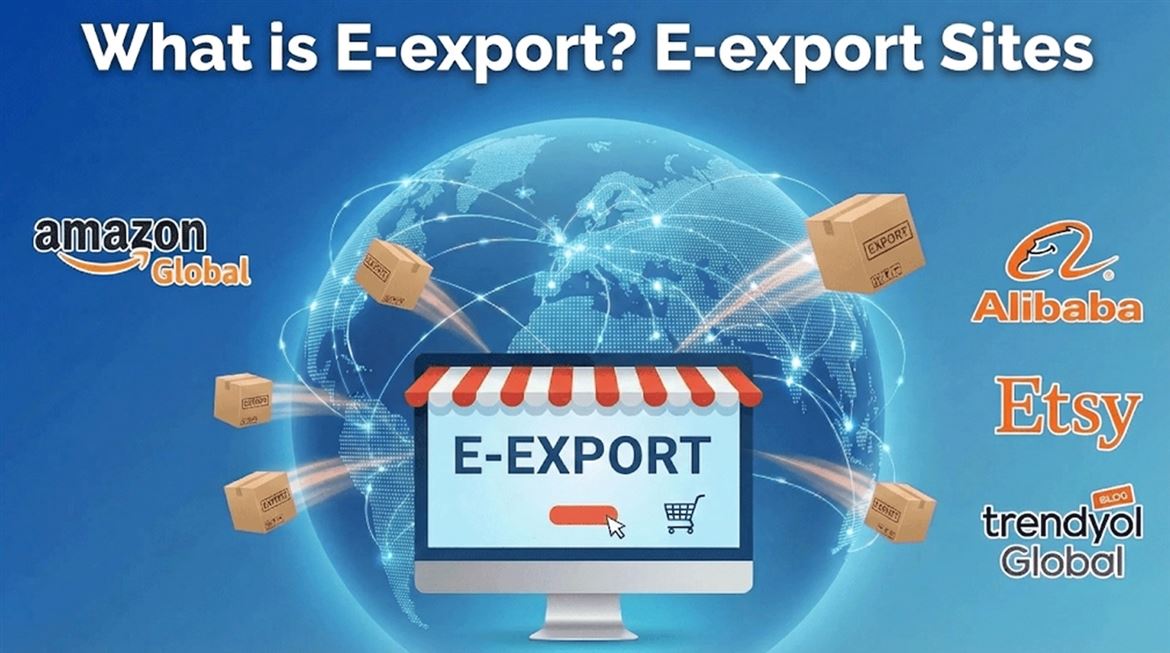
E-export is the process of delivering products or services to customers abroad through digital channels. This model enables companies to access global markets without opening a physical store. Compared to traditional export, it is preferred by many businesses because it is faster, lower-cost, and more flexible.
With the acceleration of digitalization, businesses have become able to reach consumers in different countries much more easily. Thanks to online marketplaces, payment systems, and logistics solutions, the e-export process is becoming more accessible every day. This contributes significantly to the growth targets of both small businesses and large brands.
E-export helps businesses connect their products that are in demand worldwide with broader audiences. In addition, earning revenue in foreign currency provides a major economic advantage for businesses. In this way, the brand both diversifies its income and secures a place for itself in international markets.
To compete on a global scale, it is necessary to use the right platforms, define the target audience, and develop country-specific marketing strategies. At this point, e-export websites are critical tools that provide great convenience for businesses. When the right platform is chosen, sales processes accelerate, visibility increases, and the brand reaches a stronger position in the international market.
What Is E-Export?
E-export is a modern trade model that enables businesses to deliver their products or services to customers abroad through digital channels. Unlike traditional export, it has faster-moving processes and offers the opportunity to expand into global markets without requiring a physical presence. This structure provides both small businesses and large brands with the chance to gain visibility in the international market.
One of the most important advantages of this model is the ability to reach wide geographies at a low cost. Thanks to online marketplaces, digital payment systems, and advanced logistics services, the sales process is now much easier to manage than before. By analyzing consumer behavior in the countries they target, businesses can develop the right market strategies and increase sales volume. The speed and accessibility enabled by digital infrastructures make it easier for businesses to compete globally.
E-export also strengthens businesses financially by offering the advantage of earning revenue in foreign currency. Meeting global demand increases brand value and makes a significant contribution to growth goals. The most critical point in this process is to plan country-appropriate pricing, marketing language, and logistics correctly. When managed with the right strategies, e-export turns into a sustainable revenue model for businesses.
This form of trade is attracting the interest of more businesses every day along with the opportunities offered by technology. The power of digital channels makes it easier for brands to gain recognition worldwide. Selecting suitable platforms for e-export, adapting the content language to the target market, and using effective digital ads make the process more efficient. When all these steps are implemented correctly, e-export becomes a strong model that enables businesses to secure a solid place on a global scale.
E-Export Platforms
For your business to go beyond borders and establish a presence in the global market has become a necessity rather than an option in today’s trade dynamics. Offering your products not only to local customers but also to buyers all around the world is one of the most effective ways to earn foreign currency income. In this process, the platforms you choose function as your brand’s storefront in the international arena. To make a solid start, you must identify the digital marketplace that best fits the consumption habits and sector needs of the country you are targeting. You should build your strategy by analyzing which platform provides you with advantages in logistics, payment infrastructure, and customer base.
The leading platforms that entrepreneurs who want to do e-export worldwide frequently prefer and that have high traffic potential are as follows:
- Amazon: As the platform with the world’s largest e-commerce volume, it offers an enormous customer base especially for those who want to enter the US and European markets. With its FBA (Fulfillment by Amazon) system, it manages warehousing and shipping processes on your behalf, reducing operational burden.
- Etsy: If you sell handmade, vintage, or design-focused products, this is the right place. It has a loyal customer base that values personalized products, with lower price sensitivity.
- eBay: A long-established marketplace where both new and used products can be sold and that can also operate via auctions. It offers significant opportunities especially in niche categories such as collectibles, electronics, and automotive spare parts.
- AliExpress and Alibaba: Massive platforms offering B2B and B2C options for those who want to expand into the Asian market or source products from there to the world. In wholesale-focused strategies, Alibaba stands out.
- Ozon: A rising option for Turkish exporters targeting the Russian market. It can be a strategic choice due to the strength of its logistics network in the region and the interest in Turkish products.
- Your Own E-Commerce Website (Shopify, WooCommerce, Ticimax, etc.): If you want full control of your brand and customer data independent of marketplace commission rates, websites you build on ready-made infrastructures give you complete control.
When stepping into global trade, opening a store alone is not enough; you also need to aim for operational excellence. Ensuring your products pass through customs and reach the end customer smoothly directly impacts customer satisfaction and therefore your store rating. An e-export initiative that is not supported by digital marketing is like a shop without a sign on a crowded street. For this reason, you should conduct SEO efforts aligned with the algorithms of the platform you choose and appear in front of your target audience with the right keywords. With patient and planned progress, turning a local business into a global brand is a much more achievable goal than you might think.
What Are the Differences Between E-Export and Micro Export?
In the process of selling products abroad through online channels, these two concepts are generally distinguished by the scale of the operation and the customs clearance method. While e-export, as a general definition, covers all internet-based foreign trade activities, micro export is the most practical form of this process, stripped of bureaucratic barriers. In traditional methods, there is an obligation to work with a customs broker and follow detailed declaration procedures, whereas in the micro export model, transactions proceed much faster through authorized logistics companies. Thanks to the Electronic Trade Customs Declaration (ETGB) system, time-consuming paperwork for small-scale shipments is eliminated and the process is completed digitally.
The key distinction lies in limits determined by shipment weight and invoice amount. Packages below certain kilogram and value thresholds are evaluated under micro export status, which frees the exporter from additional costs such as bonded warehouse fees or bills of lading. This system provides a major speed and cost advantage, especially for businesses that sell retail to the end consumer (B2C). Moreover, companies that perform micro export can fully benefit from VAT refund incentives just like traditional exporters. While large-volume, container-based shipments require conventional procedures, sales at the parcel-shipping scale are managed with the flexibility provided by micro export.
Required Documents and Conditions for Selling Abroad
When entering the global market, the legal foundation of the operation is just as important as the quality of your product. Shipping products abroad is not merely about preparing a cargo package; there are official procedures and financial obligations that must be completed in the background. To manage this process smoothly, avoid getting stuck at customs, and benefit from government incentives such as tax refunds, your company’s documentation infrastructure must be complete. Whether you make small shipments under micro export or plan large-volume dispatches, acting in compliance with legal regulations is the basis of sustainable trade.
The main documents and conditions you must have to start the export process and sell on a legal basis are as follows:
- Company Establishment and Tax Certificate: To export legally, you must own an officially registered business as a sole proprietorship or a limited/liability or joint-stock company.
- E-Invoice and E-Archive System: To ensure the invoices you issue abroad are accepted in customs processes, your business must be included in the electronic invoicing system.
- Exporters’ Association Membership: For standard export operations, membership in the relevant exporters’ association for your sector is mandatory; this may not be required for micro export.
- Customs Declaration or ETGB: In conventional export, a declaration is opened via a customs broker, while in micro export, the Electronic Trade Customs Declaration (ETGB) issued by carrier companies is sufficient.
- Turkish Invoice and English Proforma Invoice: Invoices that declare the contents, quantity, and value of the product in a language customs officers can understand must accompany the package.
- Certificate of Origin: This document proving where the products were manufactured may be mandatory for the customs procedures of some countries.
Completing documentation processes fully guarantees not only the product’s exit from the country but also smooth clearance through customs in the destination country. Especially for sales to European Union countries, additional tax identification requirements such as an IOSS number or specific health and safety certificates demanded by the target market may be required. Working in coordination with your logistics partner and learning the special conditions of your target market in advance will protect you from unexpected costs and time losses. Although these procedures may seem detailed at first, they can now be managed much faster and more practically thanks to digitalized customs systems.
Exporting via Your Own E-Commerce Site or via Marketplaces?
For entrepreneurs who want a fast entry into global trade, ready-made marketplaces such as Amazon, Etsy, or eBay offer a major advantage. Since these platforms already have massive traffic from millions of users ready to purchase, they enable you to start selling without allocating huge marketing budgets. The built-in trust customers place in the platform makes it easier for an unknown brand to receive its first orders and collect reviews. However, this comfort zone comes at a cost: high commission rates, listing fees, and intense competition can significantly pressure profit margins. In addition, because direct access to customer data is limited, building brand loyalty and running remarketing activities within this ecosystem is quite difficult.
Selling through your own e-commerce site means full independence and building a real brand. A store built on a dedicated infrastructure gives you complete control over every process—from design to payment methods and campaign structures. While the absence of intermediary commissions increases profitability, detailed customer data enables you to develop long-term and personalized strategies. The biggest challenge in this model is that the responsibility of driving traffic to the site lies entirely with the business. This path requires competence in digital marketing, SEO, and ad management; although it may seem more demanding at the beginning, it is the key to building a sustainable and scalable export structure in the long run.
The Most Common Mistakes Made When Starting E-Export
Hasty planning driven by the excitement of entering foreign markets causes many initiatives to stumble at the very beginning. Many businesses fall into the misconception that experience gained in the local market will apply directly in the global arena. However, every country has its own consumer habits, legal regulations, and logistics dynamics. Simply listing a product or translating a website is never sufficient for international success. Entering this journey without conducting market research, performing competitor analysis, or calculating costs accurately can unfortunately result in serious financial losses.
The key mistakes to avoid in order to achieve sustainable growth in global trade are as follows:
- Skipping Target Market Research: Entering a market without analyzing whether your product truly has demand in the target country or the situation of local competitors.
- Assuming Localization Is Just Translation: Changing the site language but failing to integrate the country’s preferred payment methods, currency, and measurement units into the system.
- Miscalculating Logistics and Customs Costs: Incurring losses by not accurately reflecting shipping fees, customs duties, and potential return costs in product pricing.
- Ignoring Legal Regulations and Certifications: Products getting stuck at customs because you did not check the target country’s health, safety, or labeling standards.
- Not Allocating a Digital Marketing Budget: Assuming that opening a store alone will generate sales, and failing to run region-specific advertising and SEO efforts.
- Providing Insufficient Customer Service: Not building an infrastructure that can respond quickly and effectively to customer requests arriving in different time zones and languages.
Learning from these mistakes and establishing a strategic roadmap secures the future of your e-export operation. The path to becoming a successful global brand is not only about focusing on immediate sales, but about turning operational processes into a flawless experience. Anticipating challenges in advance and building an agile structure moves your business one step ahead in highly competitive international markets. Every minute spent on preparation and analysis will, in the long term, protect your brand’s reputation and make it easier for you to reach your growth targets.


Do Comment