
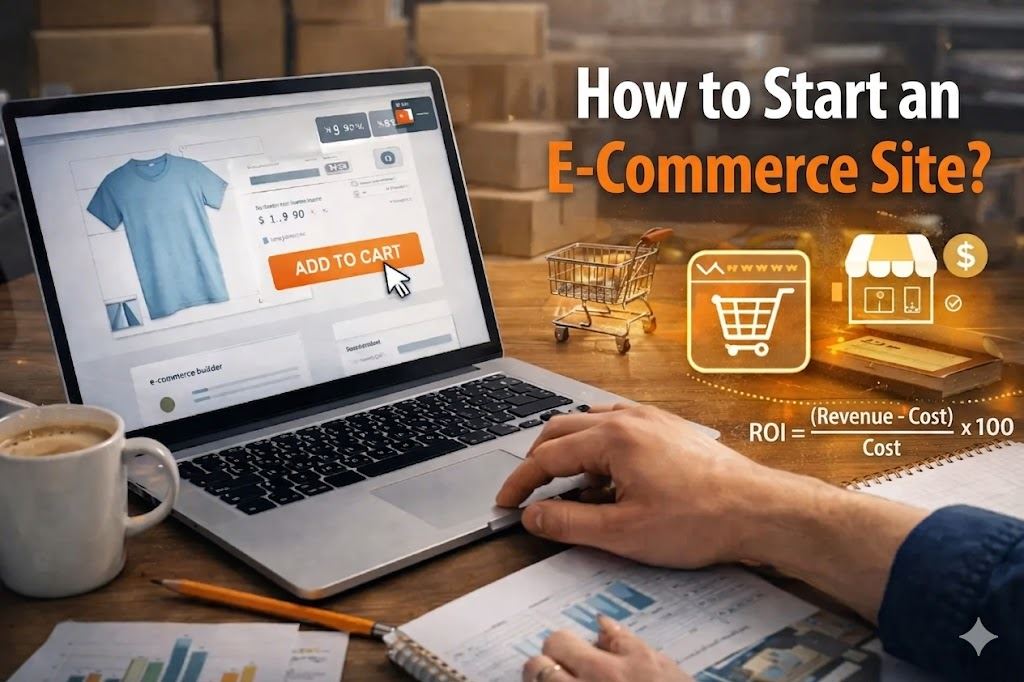
Today, setting up your own online store has become far more accessible than it was just a few years ago. To launch an e-commerce website, you first need to clearly define the product or service group you will sell, then identify your target audience and choose an infrastructure that fits your budget. Although selling on marketplaces such as Trendyol and Hepsiburada is an option, building an independent store under your own domain name is much more advantageous in terms of brand awareness and long-term profitability. The technical side of the process may seem complicated at first glance; however, if you follow the right steps in order, you can start receiving orders within a few days.
Before launching the site, establishing a solid legal foundation is a step that should never be overlooked. Starting online sales without completing official procedures such as tax registration, setting up a sole proprietorship or limited company, obtaining a registered electronic mail (KEP) address, and an e-signature may result in serious penalties. In addition, publishing mandatory pages on your website such as a distance sales agreement, privacy policy, KVKK disclosure text, and return conditions is both a legal requirement and a fundamental condition for gaining customer trust. Skipping these steps and saying “I’ll deal with it later” can lead to both financial and reputational losses in the future.
The choice of technical infrastructure depends on the scale of your project and your technical knowledge. Ready-made solutions such as Shopify, WooCommerce, and OpenCart allow you to build a professional store without requiring coding knowledge, while custom software development stands out as a more flexible but more costly option. No matter which platform you choose, mobile compatibility, fast page loading speed, secure payment integration, and a user-friendly interface should be among your non-negotiables. After choosing the right infrastructure, making your store visible through product photos, descriptive texts, and SEO efforts becomes the most critical stage on the path to sales.
What You Need to Open an E-Commerce Website
Before setting up an e-commerce website, you need to complete certain fundamental steps to ensure the entire process runs smoothly. Skipping or leaving these steps incomplete can pave the way for both technical and legal problems later on. The good part is that when everything is done in the right order and in a planned manner, the process moves forward much more easily than you might think. Below, we list the core requirements you should prepare before starting to sell:
- Establishing a company or sole proprietorship: To sell online, you must be a registered taxpayer. Depending on your budget and business model, you can choose either a sole proprietorship or a limited company.
- Domain name and hosting selection: Choose a memorable domain name that reflects your brand. On the hosting side, prefer a reliable and high-performance provider, as it will directly affect your site speed.
- E-commerce infrastructure: Build the technical backbone of your store by choosing one of the platforms such as Shopify, WooCommerce, or OpenCart. Your technical knowledge and scaling goals will be decisive in this choice.
- SSL certificate: An SSL certificate is essential to protect your customers’ personal and payment information. It provides benefits for both security and Google rankings.
- Payment infrastructure: You need to set up a virtual POS integration that offers options such as credit card, bank transfer, and cash on delivery. Solutions such as iyzico, PayTR, and Param are among the most preferred infrastructures at this point.
- Shipping agreements: Clarify your delivery process by making an agreement with at least one shipping company. Offering more than one shipping option directly increases customer satisfaction.
- Legal pages and agreements: Be sure to publish pages such as the distance sales agreement, privacy policy, KVKK disclosure text, and return conditions on your site.
- Product visuals and descriptions: Prepare professionally shot product photographs and detailed, original description texts. These two elements are among the leading factors that most affect your conversion rate.
Once you complete all these steps, you will have a store that is technically and legally ready for sales. However, setting up the website alone is not enough; the real work begins with reaching the right audience. Treating SEO efforts, social media strategy, and advertising planning as a natural part of this process will allow you to achieve your first sale much more quickly.
Which E-Commerce Infrastructure Should I Choose?
Choosing the right infrastructure is one of the most decisive decisions in your e-commerce journey. This is because the platform you prefer directly shapes your website’s speed, design flexibility, payment integrations, and scalability. Today, the most preferred solutions include Shopify, WooCommerce, and OpenCart. Shopify is an ideal option for those who want to set up a store quickly without requiring technical knowledge. It works on a monthly subscription model and manages matters such as hosting and security on your behalf. WooCommerce, on the other hand, is an open-source plugin built on WordPress, so it offers a much wider area for customization. However, the likelihood of encountering situations that require technical intervention is higher. OpenCart is similarly an open-source solution and stands out particularly for having modules compatible with payment and shipping integrations in Türkiye.
In platform selection, the scale of your business model is as critical a factor as your budget. If you are going to open a small-scale store with a limited number of products, an easy-to-use and low-maintenance infrastructure such as Shopify will more than meet your needs. On the other hand, if you plan to offer hundreds of products, multiple categories, and complex filtering options, more flexible structures such as WooCommerce or OpenCart will provide you with long-term advantages. In addition, local SaaS platforms such as Ticimax, IdeaSoft, and T-Soft also offer solutions tailored to the Turkish market. These platforms are frequently preferred especially by beginners, since they meet local needs such as virtual POS, e-invoicing, shipping integration, and marketplace connections right out of the box.
In short, there is no single correct answer to the question of the “best platform”; the best platform is the one that best suits your needs. Before making a decision, clearly define your technical knowledge, monthly budget, the number of products you plan to sell, and your future growth target. If possible, use trial versions and personally test the management panel, design editor, and integration processes. This small step will greatly help prevent you from facing costly and time-consuming situations such as changing platforms in the future.
How Much Does It Cost to Build an E-Commerce Website?
Cost is one of the first questions on the minds of everyone planning to build an e-commerce website, and in fact, it is not very easy to give a precise number. This is because total spending varies significantly depending on the infrastructure you choose, your design expectations, the number of products, and your integration needs. Roughly speaking, it is possible to start with a monthly budget of 3,000–5,000 TL for a small-scale store, while in professional projects developed with custom software, this figure can reach tens of thousands of liras. Core expense items include domain name, hosting, SSL certificate, theme purchase, and virtual POS commissions, while optional expenses such as logo design, professional product photography, and advertising budget can further increase the total cost.
The most practical way to keep the budget under control is to benefit from ready-made e-commerce packages. Monthly subscription packages offered by platforms such as Ticimax, IdeaSoft, Shopify, and T-Soft bring hosting, security, design templates, payment, and shipping integrations together under a single roof. In this way, instead of purchasing separate services one by one, you can have a professional-looking store with a single payment. Especially for beginners, these packages both significantly reduce the initial cost and eliminate installation processes that require technical knowledge. Since most platforms offer packages in different price ranges, you have the chance to choose the most suitable plan according to the size and needs of your business.
Another point to pay attention to is hidden costs that are often overlooked. The commission rates charged per transaction by the virtual POS, volume pricing in shipping agreements, e-invoice subscription fees, and additional module or plugin fees you may need later can cause you to exceed your planned budget. Therefore, it is much healthier to create a financial plan at the beginning by taking into account not only the website setup cost but also at least six months of operating expenses. This way, you can manage your growth process smoothly while keeping your cash flow under control.
How Is Payment System Integration Done?
Your customer liked the product, added it to the cart, and clicked the purchase button. At exactly this point, if the payment process does not work smoothly, you lose that sale. That is why a reliable payment system integration is one of the most critical building blocks of your e-commerce website. In Türkiye, the most commonly used virtual POS solutions include payment institutions such as iyzico, PayTR, Param, and Sipay. These intermediary companies allow you to connect the virtual POS of multiple banks to your website through a single integration. This saves you the trouble of making separate agreements with each bank and allows you to manage installment options easily.
The integration process varies depending on the e-commerce infrastructure you use. Most platforms such as Shopify, WooCommerce, Ticimax, or IdeaSoft offer ready-made module support for popular payment providers. In this case, what you need to do is apply to the relevant payment company, complete the merchant agreement, and enter the API information provided to you into your management panel. On websites using custom software, integration is usually carried out through developer support based on API documentation. In both cases, you should definitely perform test transactions in the test environment to make sure the payment flow works without any issues.
Offering variety in payment methods is also a factor that directly affects your conversion rates. In addition to credit cards and debit cards, activating bank transfer/EFT, cash on delivery, and mobile wallet options helps ensure that you do not lose customers with different shopping habits. Especially cash on delivery still has a high level of trust among consumers in Türkiye, so not offering this option can mean a serious loss of sales. After enabling all these methods, make sure you also meet security standards such as 3D Secure requirements and PCI DSS compliance; this is both a legal requirement and a concrete sign of the assurance you provide to your customers.
How to Increase Organic Traffic with SEO
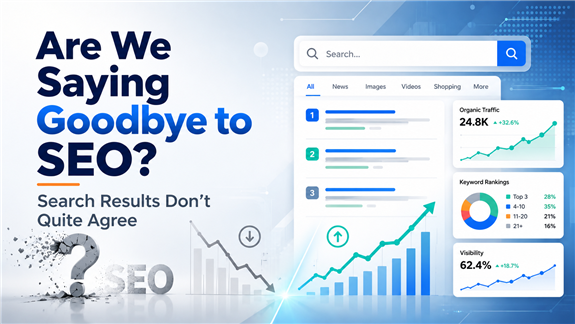
You have built your e-commerce website, uploaded the products, and completed the payment infrastructure. But how will customers find you? This is exactly where SEO comes into play. Search engine optimization is an organic growth strategy that helps you appear at the top of Google for the keywords your target audience searches for. Unlike campaigns that stop when the advertising budget runs out, a properly structured SEO effort creates a continuous and free traffic source in the long term. This makes it one of the digital marketing channels with the highest return on investment for e-commerce websites.
Technical SEO forms the foundation of this process. Elements such as site speed, mobile compatibility, URL structure, canonical tags, XML sitemap, and structured data (schema markup) are critically important for search engines to crawl and index your website correctly. Especially in e-commerce sites, where there are hundreds or even thousands of product pages, even a small error in the technical infrastructure can lead to indexing problems. Regularly monitoring Google Search Console to detect crawl errors, slow-loading pages, and mobile usability problems at an early stage is the most effective way to protect your organic visibility.
Your content strategy is the main artery that feeds organic traffic. Using original and detailed descriptions on your product pages, adding informative introductory texts to category pages, and publishing guide content in the blog section that answers your target audience’s questions broadens your keyword diversity. For example, a blog article you prepare for an informational search query such as “how to clean white sneakers” is an effective way to attract potential customers to your site before they have even reached the purchasing stage. By naturally giving internal links to your product pages within this content, you can direct the user to the next step of the sales funnel.
You can manage SEO efforts in-house, or getting professional agency support can significantly speed up the process. At this point, learning about current SEO prices may be useful in planning your budget correctly. Whichever path you choose, do not forget that SEO is a marathon. Results may remain limited in the first few months; however, with regular content production, technical improvements, and quality backlink efforts, it is quite likely that you will observe a noticeable increase in your organic traffic from the sixth month onward. Being patient and consistent is the unchanging rule of success in this field.
Common Mistakes in E-Commerce and Their Solutions
Many entrepreneurs think that sales will come automatically as soon as they launch their e-commerce website. However, success in online sales depends on the consistent application of the right strategies. Mistakes often accumulate unnoticed, and it becomes difficult to understand why sales remain low. The good part is that most of these mistakes are predictable and preventable. Below, we address the most common problems encountered in e-commerce and practical solutions to them.
Insufficient product descriptions and low-quality visuals are among the leading factors that reduce conversion rates the most. While in a physical store the customer can hold and examine the product, in online shopping this experience is replaced by photographs and description texts. A low-resolution image taken from a single angle or a few words of copied-and-pasted description is far from enough to persuade a customer to buy. Use professional photographs taken from different angles for each product, and prepare original texts that explain the product’s features, areas of use, and size information in detail.
A complicated and lengthy purchasing process directly increases cart abandonment rates. If the customer has to navigate through three or four pages before reaching the payment stage, or is forced to register, they will most likely abandon the purchase midway. Offering a guest checkout option, simplifying the payment steps as much as possible, and clearly showing the shipping fee and total amount on the cart page are the most effective ways to solve this problem.
Ignoring the mobile experience is one of the most costly mistakes you can make today. More than half of online shopping in Türkiye takes place on mobile devices. Even if your site looks perfect on desktop, if it loads slowly on a phone, the buttons overlap, or product images do not fit properly, it means you are facing a serious customer loss. Responsive design should not be treated merely as an item on a checklist, but should be placed at the center of the user experience.
Completely neglecting SEO and remaining dependent only on advertising is a classic trap that many e-commerce websites fall into. Paid ads provide traffic in the short term, but when the budget is cut, the visitor flow stops as well. Failing to optimize the meta titles and descriptions of product pages, not including content on category pages, and not actively using the blog section lead to a major loss of opportunity in terms of organic visibility. Running advertising and SEO as two complementary channels is the key to sustainable growth.
Underestimating customer service and post-sales processes is another frequently repeated mistake. Making the first sale is important, but winning that customer back is far more valuable. Late responses to questions, unclear return policies, and untracked shipping processes damage customer trust and pave the way for negative reviews. Offering live support or a WhatsApp contact line, sharing order status through automatic notifications, and managing the return process transparently are concrete steps that strengthen customer loyalty.
Finally, making instinctive decisions without analyzing data seriously slows down your progress in e-commerce. Without knowing which products are viewed the most but sold the least, which traffic source brings the highest conversion, and at what point customers leave the site, you cannot make the right moves. Regularly review Google Analytics, Search Console, and the reporting tools of the e-commerce platform you use. Making data-driven decisions always outperforms strategies based on guesswork and clearly sets you apart from your competitors in the long run.


Do Comment