

To determine a marketing budget, you should first allocate a certain percentage of your annual revenue, then reflect your industry’s level of competition and your growth targets in that ratio. According to widely accepted approaches, small and medium-sized businesses allocate between 5% and 10% of their revenue to marketing, while companies pursuing aggressive growth may allocate up to 15%. However, these figures alone are not enough; finding the right budget requires evaluating your company’s lifecycle, customer acquisition cost, and digital transformation needs together.
The most common mistake in the budgeting process is choosing numbers arbitrarily. The marketing needs of an e-commerce brand and a local restaurant chain are very different; while one may need to focus heavily on Google Ads, local SEO and social media may be far more efficient for the other. That is why, when creating your budget, answering the question “Which channels should I spend on, and for which conversion goals?” is a much more strategic starting point than simply asking “How much should I spend?” Benchmark analyses based on industry data come into play հենց այստեղ and help you create a realistic roadmap.
The dynamics of each industry, customer journey, and competitive conditions directly shape marketing spending. For example, in the technology sector, a larger share is allocated to content marketing and inbound strategies, while in retail, performance advertising and seasonal campaigns make up the main budget items. In this content, we will examine sample budget allocations for different industries, the criteria you can use to determine your ratios, and practical ways to optimize your budget step by step.
What Is a Marketing Budget and Why Is It Important?
A marketing budget is the total financial resource a business allocates within a specific period to build brand awareness, acquire customers, and increase sales through marketing activities. This resource covers a wide range of areas, from digital advertising spend to content production, social media management, and event sponsorships. A budget is not just a number; it is also the financial translation of a company’s growth strategy. A well-structured marketing budget clearly shows what goal every amount spent is meant to serve.
The importance of a marketing budget becomes much more evident, especially in highly competitive industries. Marketing efforts carried out without a budget or a clear plan may seem like savings in the short term, but in the long term, they lead to a loss of brand value and uncontrolled increases in customer acquisition costs. Companies with a systematic budget plan know in advance how much to invest in each channel, can measure performance, and can intervene quickly when needed. This transforms marketing from a cost item into a measurable investment.
Especially for companies in a growth phase, the marketing budget is a strategic decision that directly affects cash flow and resource allocation. Without a budget, it becomes almost impossible to understand which campaigns are working and which are wasting money. Moreover, investors and stakeholders also pay attention to how consciously a company manages its marketing expenses. In short, a marketing budget is the concrete indicator of a business’s determination to protect and strengthen its market position.
Which Criteria Should You Consider When Setting a Marketing Budget?
When creating a marketing budget, rather than picking a random number, you need to establish a framework that fits the real dynamics of your business. Every company has a different revenue level, competitive environment, and target audience; therefore, no single formula works for everyone. However, there are universal criteria that can help you build your budget on solid foundations. When you take these criteria into account, your spending stops being random and becomes a measurable investment.
- Annual Revenue and Turnover: The main starting point of your budget is your company’s annual revenue. Allocating a certain percentage of your revenue to marketing helps you keep spending under control while creating resources proportionate to your growth goals.
- Industry and Competition Level: The intensity of competition in the industry you operate in directly affects the size of your budget. In highly competitive sectors, a more aggressive investment plan may be required to remain visible.
- Target Audience and Market Size: The size of the audience you want to reach and that audience’s digital habits determine which channels you should allocate your budget to. If you operate in a narrow niche market, more focused and lower-budget campaigns may be sufficient, whereas if you target a broad audience, allocating a larger budget becomes unavoidable.
- Company Growth Stage: A newly established brand and a well-established company in the market cannot operate with the same budgeting logic. While a business in the launch phase must devote a larger share of its revenue to marketing in order to build awareness, a company in the maturity stage may prefer a more balanced distribution aimed at retaining its current customer base.
- Customer Acquisition Cost (CAC): Knowing how much it costs you to acquire one customer is the key to using your budget efficiently. If your CAC is high, you need to optimize your spending; if it is low, you should evaluate scaling opportunities.
- Marketing Channels and Tools: The channels in which you will be active directly shape your budget distribution. Each channel—such as SEO, social media ads, email marketing, and influencer collaborations—has a different cost structure, and you need to plan your budget according to this channel mix.
- Past Performance Data: The conversion rates, cost-per-click figures, and return on investment from your previous campaigns are the most reliable reference points for your new-period budget. A data-driven approach not only prevents repeating the same mistakes but also allows you to allocate more resources to strategies that are already working.
When you evaluate each of these criteria together with your own business conditions, your marketing budget becomes analysis-based rather than guess-based. The important thing is not to look at each item separately, but to connect all these factors and build a holistic plan. This way, your budget stops being just a cost table and becomes your company’s growth engine.
What Percentage of Revenue Should Be Allocated to Marketing?
According to generally accepted practice, businesses should allocate between 5% and 10% of their annual revenue to marketing activities. However, this ratio is not a fixed rule but a starting point. For brands that are newly established and in the awareness-building phase, this rate may rise to between 12% and 20%, while companies with a well-established market position may achieve effective results with a budget of around 5%. The determining factors are the company’s stage, industry dynamics, and growth rate.
In B2B (business-to-business) companies, the marketing budget usually ranges between 2% and 5% of revenue, while in B2C (business-to-consumer) brands, this ratio rises to between 5% and 10%. The main reason is the need to reach broader audiences in consumer markets and the higher cost of advertising. For example, a SaaS company may generate conversions with a lower budget through content marketing and inbound strategies, whereas a fashion brand must allocate a much larger resource to social media ads and influencer collaborations.
The healthiest way to find the right ratio is to use industry averages as a reference and combine them with your own business goals. Setting a budget solely by looking at competitors’ spending levels can be misleading, because every company has different profit margins, customer lifetime value, and operational expenses. The real issue is not how much of your revenue you allocate, but how efficiently you use the budget you allocate.
Marketing Budget Examples by Industry
Each industry’s marketing budget is shaped by that field’s competitive conditions, customer behavior, and sales cycle. Since no single ratio applies to every sector, knowing the average spending levels in your own field gives you a strategic advantage. Below, you can examine concrete examples of how different industries approach their marketing budgets.
Technology and SaaS: Software and technology companies typically keep their marketing budgets between 15% and 20% of revenue. Behind this high ratio are rapid growth pressure, intense digital competition, and the constant need to acquire new users. Content marketing, search engine optimization, paid search ads, and product trials (freemium models) are the biggest expense items in this sector. Especially in SaaS companies, since customer acquisition cost is high, a significant portion of the budget is allocated to the upper stages of the conversion funnel.
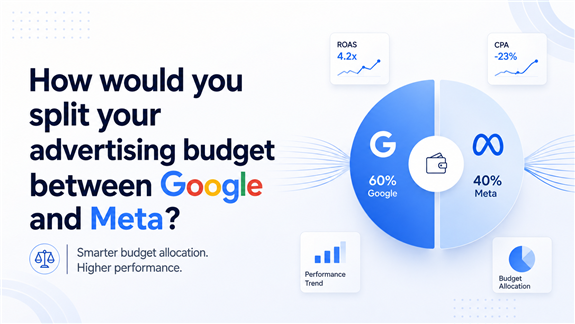
E-commerce and Retail: Online and physical retail brands allocate between 5% and 12% of their revenue to marketing. In this sector, the largest share of the budget goes to performance advertising, meaning Google Ads, Meta ads, and shopping campaigns. Seasonal fluctuations directly affect budget distribution; advertising spend rises noticeably during periods such as Black Friday, New Year, and summer sales. Another major cost item for e-commerce brands is retargeting campaigns, because reducing cart abandonment rates directly impacts revenue.
Healthcare and Pharmaceuticals: The healthcare sector has to manage its marketing budget more cautiously due to regulatory restrictions and advertising limitations. The average budget ratio varies between 3% and 7% of revenue. While hospital groups and clinic chains focus on strengthening their digital presence, improving patient experience, and local SEO efforts, pharmaceutical companies invest in more specific channels such as physician-focused marketing, medical congresses, and support for scientific publications.
Finance and Banking: In the financial services sector, the marketing budget is around 5% to 10% of revenue. Building trust forms the foundation of all marketing activities in this field. Banks and insurance companies allocate substantial resources to brand reputation campaigns, digital customer acquisition, and cross-selling strategies. Fintech companies, on the other hand, use much more aggressive budgets compared to traditional financial institutions and prioritize growth-focused performance marketing.
Food, Beverage, and Restaurants: Businesses operating in the food sector spend between 3% and 6% of their revenue on marketing. For restaurant chains and franchise brands, local advertising, social media content, and loyalty programs are the main budget items. In small-scale businesses, since the budget is more limited, low-cost but high-impact tactics such as organic social media posts, Google Business Profile optimization, and customer review management come to the forefront. In recent years, commissions paid to online ordering platforms have also become a hidden item in the marketing budget of this sector.
Budget Allocation Between Digital Marketing and Traditional Marketing
Today, the majority of businesses allocate 60% to 70% of their total marketing budget to digital channels, while assigning the remaining share to traditional media. The biggest reason for this shift in favor of digital is measurability; in digital advertising, you can instantly track the cost of every click, impression, and conversion. Digital channels such as SEO, social media advertising, email marketing, and content strategies give small and medium-sized businesses the opportunity to reach wide audiences with limited budgets. However, this dominance of digital does not mean that traditional methods are completely ineffective.
Television, radio, print media, and outdoor advertising are still powerful tools for reaching certain target audiences. Traditional channels remain indispensable, especially for local businesses, brands targeting older demographics, and large companies running brand awareness campaigns. The right strategy is not to see digital and traditional channels as competitors, but to position them as complementary. For example, awareness created by an outdoor advertisement can be converted through digital retargeting campaigns. The main factor in budget allocation is your target audience’s media consumption habits and your campaign objectives.
Factors Affecting Your Marketing Budget
A marketing budget is not shaped by a single variable; it emerges from the evaluation of multiple factors together. Even two companies operating in the same sector can determine very different budgets depending on these factors. To place your spending on a realistic foundation, you should definitely take the following elements into account.
- Economic Conditions and Market Situation: Inflation, exchange rates, and the overall economic climate directly affect marketing spending. During periods of economic contraction, many companies cut budgets, while brands that turn such periods into an opportunity can gain visibility at lower costs in the space left by competitors.
- Digital Maturity of the Target Audience: The online behavior of the audience you want to reach determines which channels you should allocate your budget to. If you are targeting a digitally inclined younger audience, social media and content investments will come to the forefront, while if you appeal to a demographic with more traditional habits, you need to allocate part of your budget to offline media.
- Product or Service Lifecycle: The marketing needs of a newly launched product and a service that has been in the market for years are not the same. During the launch stage, intensive spending is required to create awareness, so the budget increases, whereas for products in the maturity stage, a more optimized spending plan focused on loyalty and repeat purchases may be sufficient.
- Competition Intensity and Market Share: Your competitors’ marketing investments indirectly determine how much you also need to spend. In a market full of competitors pursuing aggressive advertising strategies, increasing your budget may become inevitable in order not to remain invisible. The difference between protecting your market share and growing it is also a variable that directly affects the size of your budget.
- Length of the Sales Cycle: In consumer products with short sales cycles, instant conversion-focused campaigns sit at the center of the budget, while in areas dominated by long sales processes such as B2B, long-term investments such as lead nurturing, webinars, and thought leadership content receive a larger share.
- Technological Infrastructure and Automation Capacity: Investments in marketing automation tools, CRM systems, and analytics platforms may seem to increase the budget at first glance, but in the medium and long term they significantly improve efficiency. Campaigns run through manual processes are both more costly and harder to scale; therefore, your technology infrastructure should be an integral part of your budget planning.
- Seasonality and Campaign Calendar: In some sectors, sales peak during certain times of the year. In fields such as tourism, retail, and education, seasonal demand largely shapes the periodic distribution of the budget. Since advertising costs increase during peak seasons, you should definitely take these fluctuations into account while spreading your budget across the year.
Rather than evaluating all these factors independently, seeing the relationship between them is the foundation of healthy budget planning. When economic conditions change, your sales cycle may lengthen, competitive pressure may increase, or your target audience’s channel preferences may shift. Therefore, instead of setting your budget once a year and putting it aside, the most rational approach is to review these variables regularly and keep your budget flexible.
How Can You Optimize Your Marketing Budget?
The first step in budget optimization is to clearly measure the performance of your current spending. You should regularly analyze how many conversions come from each channel, the cost-return ratio of each campaign, and how your customer acquisition cost is trending. Google Analytics, the reporting tools of advertising platforms, and CRM data are your most reliable sources at this point. Optimization efforts made without data remain guess-based and often lead to the mistake of confusing budget cuts with optimization.
A/B testing is one of the most practical ways to use your budget more efficiently. By testing every variable—from ad copy and visuals to target audience segments and bidding strategies—you can discover which combination delivers the best results. Instead of continuing to allocate resources to low-performing campaigns, directing that budget to channels and content with higher conversion rates creates a concrete difference in a short time. At the same time, investments in long-term strategies such as organic traffic and content marketing help reduce dependence on paid advertising over time and balance your total spending.
Budget optimization is not a one-time process, but an ongoing cycle. Since market conditions, consumer behavior, and platform algorithms are constantly changing, a campaign that performed perfectly three months ago may not deliver the same efficiency today. Therefore, reviewing your budget allocation on a monthly or at latest quarterly basis, questioning low-return items, and reserving a flexible share to test new opportunities is the healthiest approach. Flexible budget management allows you to adapt quickly to changing conditions and paves the way for maximum return on every amount you spend.

)
Do Comment