

The most critical question every business investing in digital marketing must answer is whether the budget being spent is truly delivering a return. ROI, or return on investment, is calculated in its simplest form with the following formula: subtract the investment cost from the revenue generated, divide the result by the investment cost, and multiply by 100. For example, if you spent 10,000 TL on an advertising campaign and generated 35,000 TL in revenue from that campaign, your ROI would be 250%. This means that every 1 TL you invested generated 2.5 TL in return. However, things are not that straightforward in digital marketing. You also need to take into account how much each channel contributes, indirect conversions, and long-term customer value.
Many businesses rely on intuition rather than concrete data when increasing their digital marketing budget. Yet when measurement is done correctly, you can clearly see which campaign converts into sales and which channel is wasting budget. Understanding the difference between money spent on Google Ads and conversions coming from organic search traffic can radically change your budget allocation. ROI calculation is not just a mathematical process, but also a strategic compass. When interpreted correctly, it clearly shows you which path to follow.
The biggest factor that makes calculation difficult is the multi-channel nature of digital marketing. A user may see your Instagram ad, search for you on Google, and then make a purchase through your email campaign. In that case, which channel will you attribute the conversion to? This is exactly where attribution models come into play. Models such as first-click, last-click, or multi-touch attribution evaluate the contribution of each channel differently. To calculate ROI accurately, it is not enough to look only at revenue and expense figures; you must understand the entire customer journey and measure the value of every touchpoint.
ROI Calculator
ROI Calculator
Calculate the return on your digital marketing investment
ROI Formula and Basic Calculation Logic
The ROI formula is essentially based on a very simple logic: you subtract the total investment cost from the revenue you generated, divide the remaining amount by the investment cost again, and multiply the result by 100. The percentage value that emerges shows how much your investment has earned or lost for you. For example, imagine that you allocated 20,000 TL to an e-commerce campaign and that this campaign generated 60,000 TL in revenue. When you apply the formula, you reach the result (60,000 - 20,000) / 20,000 x 100 = 200%. This means that every 1 TL you spent left you with 2 TL in net profit.
Although the formula itself is simple, reaching the correct result depends on the numbers you put into it. Many marketers count only ad spend as a cost; however, agency fees, content production costs, software subscriptions, and labor hours spent are also part of the total investment. When you leave these items out, ROI appears higher than it really is and leads you to misleading decisions. Likewise, on the revenue side, including not only direct sales but also repeat purchases and cross-sell revenue triggered by the campaign provides a much more realistic picture.
Once you understand the basic calculation logic, the important thing is to apply this formula regularly and separately for each channel. Google Ads, social media advertising, email marketing, and SEO efforts generate different returns with different budgets. When you track the ROI of each independently, you can see with concrete data which channel you should shift your budget toward. Instead of relying on a single overall ROI figure, conducting channel-based analysis is the first step in building your marketing strategy on a data-driven foundation.
Differences in ROI by Digital Marketing Channel
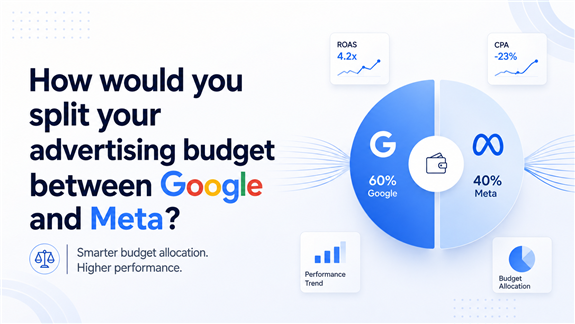
Each digital marketing channel operates with a different dynamic and naturally offers a different return profile. Search ads such as Google Ads generally produce a strong ROI in the short term because they target users with high purchase intent. The user is already looking for a product or service, and you appear at the right moment. Social media ads, on the other hand, work with a focus on awareness and demand generation, so the conversion process is more long-term. A person who clicks on your Instagram ad may not buy at that moment, but may convert weeks later after remembering your brand. Therefore, comparing the ROI values of the two channels within the same time frame produces misleading results.
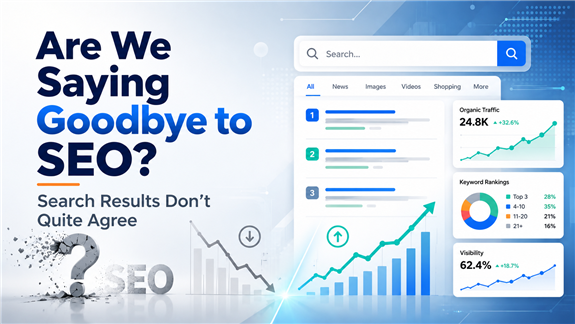
Email marketing generally stands out as the channel that provides the highest return at the lowest cost because it reaches your existing customer base. The cost of an email campaign usually consists only of software subscription fees and content preparation time; in return, the conversion rates you achieve may be quite satisfying compared to other channels. SEO has the opposite structure. It requires serious effort, time, and budget in the first months, and tangible returns usually begin to become clear only between six months and one year. However, once organic traffic is established, it turns into an asset that continuously generates conversions without an ad budget.
Understanding these return differences between channels is one of the most critical determinants in budget allocation. For a business that needs short-term cash flow, it makes sense to focus on search ads, while a brand aiming for long-term growth should allocate more resources to SEO and content marketing. The right strategy is not to depend on a single channel, but to evaluate each channel’s ROI performance within its own context and optimize the budget accordingly. Otherwise, you may leave a high-performing channel too early or unnecessarily transfer resources to a low-performing one.
The Most Common Mistakes When Calculating ROI
Even if the formula is correct, if the data you put into it is incomplete or incorrect, the ROI figure you obtain will mislead you. Many businesses increase budgets thinking campaigns are profitable when they are not, or conversely, shut down a well-performing channel too early. Most of these mistakes stem not from technical inadequacy, but from small details that are overlooked.
- Calculating only ad spend as a cost: Agency commissions, design expenses, software subscriptions, and labor spent on content production are an important part of the cost. If you do not include them, ROI appears much higher than it really is.
- Setting up incomplete conversion tracking: When pixels or UTM parameters are not configured properly, you cannot know which sale came from which campaign. It is impossible to calculate the return of something you cannot measure.
- Comparing all channels within the same time period: If you compare the return of SEO work to Google Ads in the first month, you unfairly declare organic traffic unsuccessful. Every channel has a different maturation period, and ROI evaluation should be made accordingly.
- Ignoring indirect conversions: A user may see your social media ad, search for you on Google, and then purchase through email. Focusing only on the last click means erasing the contribution of the channels at the beginning of the journey.
- Not taking customer lifetime value into account: Calculating ROI based only on the revenue of a single sale is a short-sighted approach. If a customer purchases again throughout the year, the initial acquisition cost may appear high at first but be very profitable in the long run.
- Limiting revenue only to direct sales: Indirect gains such as brand awareness, email list growth, or improvements in organic search rankings form the basis of future revenue. Leaving them completely out underestimates the campaign’s real impact.
The common point of these mistakes is viewing ROI calculation through a narrow window. For a realistic return analysis, you need to show the same care not only to the formula, but also to data quality, measurement infrastructure, and the evaluation period. These seemingly small details determine whether your strategic decisions rest on a solid foundation or on fragile assumptions.
Which Metrics Directly Affect ROI?
ROI is a result metric on its own; what actually shapes it are the performance metrics working in the background. Looking only at the final number without tracking these metrics makes it difficult to understand where the problem lies. If you want to increase returns or reduce costs, you first need to know which variables directly affect the outcome.
- Cost Per Acquisition (CPA): This is the average amount you pay to acquire a customer. As CPA decreases, you acquire more customers with the same budget, and ROI naturally rises. Tracking this metric separately by channel is the clearest guide in budget optimization.
- Conversion Rate: This shows what percentage of visitors coming to your site complete the action you want. No matter how high your traffic is, if the conversion rate is low, your spending does not pay off. Even a small increase in rate can create a serious jump in revenue.
- Average Order Value (AOV): This is the average revenue you obtain from each conversion. Even if the number of customers stays the same, increasing order value raises total revenue and therefore the return rate. Cross-sell and upsell strategies directly feed this metric.
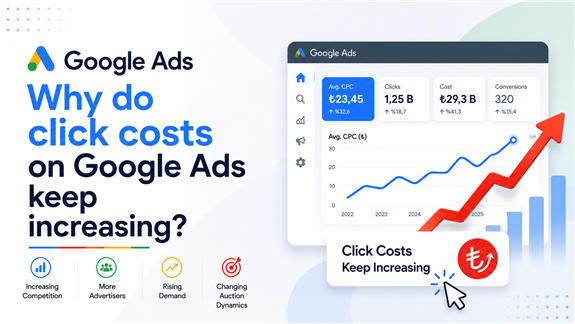
- Cost Per Click (CPC): Especially in paid advertising campaigns, this is the amount you pay for each click. A high CPC narrows your profit margin even if your conversion rate is good. Ad copy quality, targeting precision, and landing page experience are the most effective ways to lower this cost.
- Customer Lifetime Value (CLV): This refers to the total revenue a customer leaves throughout their relationship with your brand. Even if the first purchase cost appears high, if the customer buys repeatedly, the real ROI is much more positive. This metric reveals long-term profitability that does not appear in short-term reports.
- Bounce Rate and Session Duration Per Page: If users come to your site and leave quickly, it means the money you paid for traffic is being wasted. These two metrics do not directly provide a sales figure, but they are fundamental indicators that silently erode conversion rate and therefore returns.
Each of these metrics affects either the revenue or cost side of the ROI formula from different angles. Instead of fixating on a single indicator, when you track them as a whole, you can understand much more clearly why your return rate is rising or falling. The truly strong strategy lies in reading these data points in relation to one another.
How Should ROI Be Evaluated for Organic Traffic?
Measuring the return of organic traffic is a more complex process compared to paid advertising because there is no direct cost per click. However, being “free” does not mean it is costless. The cost of content production for SEO work, the technical optimization process, subscriptions to analysis tools, and any outsourced consulting services form the total investment. On the revenue side, by filtering conversions coming from the organic channel through Google Analytics, you can clearly see the sales or lead value generated by this traffic. Once you determine the investment and revenue figures, applying the standard ROI formula is sufficient.
The main point that should be considered with organic traffic is setting the evaluation period correctly. Calculating ROI three weeks after publishing a blog post and saying “this did not work” is like planting a sapling and expecting fruit a month later. SEO investments usually mature between six months and one year, and begin to show their real return clearly from the second year onward. Therefore, evaluating them quarterly or annually rather than monthly gives much healthier results. In addition, tracking cumulatively how much traffic and how many conversions a piece of content has generated since its first publication is the most accurate way to understand its true performance.
An overlooked advantage of the organic channel is the compounding return effect. In paid advertising, traffic stops the moment you turn the budget off; however, a well-positioned piece of content can continue generating conversions for months or even years. This means that an ROI value that initially looks low multiplies over time. When evaluating, you need to take into account not only instant figures but also the total lifetime value the content generates. You can only truly understand the power of organic traffic with this long-term perspective.
Tools That Can Be Used for ROI Tracking
Knowing the correct formula alone is not enough; you need reliable tools to regularly collect, analyze, and report the data. Manual calculations may work for small-scale campaigns, but if you are managing multiple channels and dozens of campaigns at the same time, automating this process both saves time and minimizes the margin of error.
- Google Analytics 4: It allows you to separate conversions coming from organic, paid, and social media traffic on a channel basis. When you set up goals and e-commerce tracking, you can directly see how much revenue each traffic source generates. Its free availability and comprehensive attribution models make it almost indispensable.
- Google Ads Conversion Tracking: It reports the cost per conversion, total return value, and ROAS (return on ad spend) rate of your search and display campaigns at the campaign level. It is the most direct source of your paid channel data in ROI calculation.
- Meta Ads Manager: It lets you track the performance of your Facebook and Instagram ads based on purchases, leads, and custom conversions. When pixel integration is set up correctly, you can analyze the real return of your social media investment in great detail.
- HubSpot: By combining marketing, sales, and CRM data under one roof, it allows you to track the entire journey of a customer from the first touchpoint to purchase. It makes ROI calculation based on customer lifetime value much easier, especially for B2B businesses.
- SEMrush and Ahrefs: They provide in-depth information about your organic search performance, keyword rankings, and competitor analysis. To measure the impact of your SEO investment on traffic and visibility, you need to evaluate the data obtained from these tools together with your conversion figures.
- Google Looker Studio: It enables you to create visual reports by combining data from different sources into a single panel. By displaying metrics pulled from Google Analytics, Google Ads, and third-party platforms together, you can prepare dynamic dashboards that allow you to grasp your overall ROI picture at a glance.
The variety of tools may seem overwhelming at first, but you do not have to use all of them. What matters is building a combination that fits your business size, the channels you are active in, and your budget. For a small e-commerce site, Google Analytics 4 and Google Ads may be enough, while a brand running a multi-channel marketing operation may need a comprehensive platform such as HubSpot together with a Looker Studio integration. Choosing the right tools turns ROI tracking from a burden into a natural part of your daily decision-making process.
What Should You Do If You Are Getting Low ROI?
The worst thing you can do when faced with a low return rate is to panic and stop all campaigns or randomly cut the budget. First, you need to identify the source of the problem. Is the cost side swelling, or is the revenue side falling below expectations? Any step taken without clarifying this distinction only shifts the problem to another point instead of solving it. By examining your data in Google Analytics and advertising platforms on a channel basis, determine exactly where the underperformance is coming from.
Once you find the source of the problem, it makes sense to start with the interventions that create the fastest effect. If your conversion rate is low, review your landing pages; page speed, message alignment, and the clarity of your call-to-action buttons are usually the first places to look. If your acquisition cost is high, narrow your targeting criteria and focus on the audience with real purchase potential. If you are getting clicks but not conversions, check the consistency between the promise in the ad copy and the landing page. Sometimes the problem is not in the campaign itself, but in the experience that greets the user. A/B tests will be your most reliable guide at this stage because they allow you to make decisions based on real user behavior rather than assumptions.
In addition to short-term optimizations, it is also necessary to step back and look at the strategic picture. Perhaps a large part of your budget is flowing into a low-return channel, and rebalancing resource allocation is enough. Or perhaps remarketing to your existing customers may be a much more efficient path than acquiring new ones. Low ROI does not always mean failure; sometimes it is a signal that you are investing in the wrong channel, at the wrong time, or to the wrong audience. When you read this signal correctly and shape your strategy accordingly, it becomes possible to achieve much stronger results with the same budget.




Do Comment